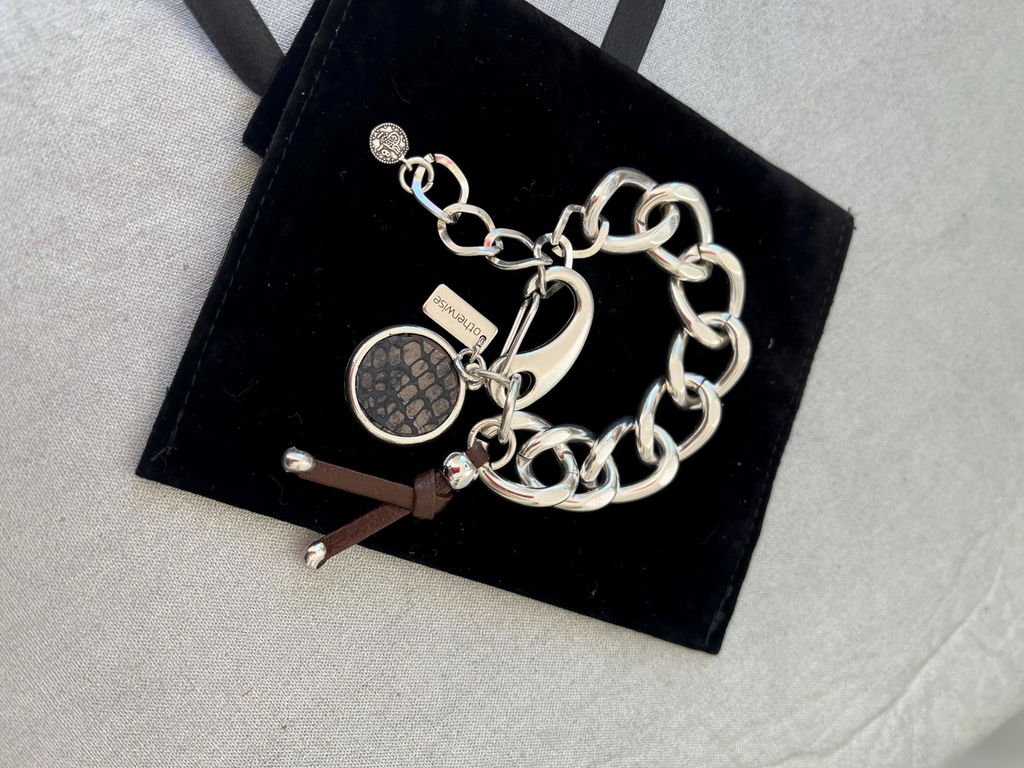
How to Wear Bold Cuffs Daily
You do not need a special event, a dramatic dress, or a packed social calendar to justify a strong cuff. If you have ever wondered how to wear bold cuffs daily without feeling overdressed, the answer is simpler than most style rules make it sound: stop treating the cuff like the extra, and start treating it like the point.
A bold cuff changes the posture of an outfit fast. It gives shape to a plain sleeve, authority to a tank, edge to soft fabrics, and intention to pieces you already wear on repeat. That is why it works so well in real life. The right cuff does not make your everyday look harder to wear. It makes it harder to ignore.
Why bold cuffs work in everyday style
A statement cuff earns its place because it does more than decorate. It creates a focal point, and focal points are what make simple outfits feel styled instead of accidental. Jeans and a black tee can look forgettable on their own. Add a structured metal cuff or a mixed-material leather piece, and suddenly the whole look has presence.
This matters if you are tired of clothes doing too little. A lot of people keep their outfits minimal because they want ease, but then end up feeling flat or invisible. Bold cuffs solve that tension well. They let you keep the outfit clean while still saying something strong.
The other reason they work daily is practical. Unlike a necklace that can compete with necklines or earrings that may feel too dressy for some settings, a cuff sits in a controlled part of the look. It shows when you reach for your coffee, type on your laptop, open a door, or tuck your hair back. It moves with you. That kind of visibility makes a statement piece feel alive instead of staged.
How to wear bold cuffs daily without overthinking it
The easiest way to make a bold cuff feel natural is to build around contrast. If the cuff is dramatic, the outfit does not need to be. In fact, the stronger the bracelet, the more powerful it often looks against something pared back.
A crisp button-down with rolled sleeves is one of the best examples. The cuff sharpens the look and makes it feel intentional, not corporate. A fitted knit top works the same way, especially when the sleeve length leaves room for the bracelet to show. Tank tops, sleeveless dresses, relaxed blazers, and simple monochrome sets also give a cuff room to stand out without fighting for attention.
That does not mean every outfit has to be plain. It means the outfit needs a clear hierarchy. If your cuff is oversized, sculptural, heavily textured, or rich in mixed materials, let it be the most assertive thing on your body. Pair it with clean lines, solid colors, or pieces with subtle structure. If your clothes already have volume, shine, or heavy print, choose a cuff that still feels bold but has one cleaner element, like a strong silhouette in a single finish.
This is where a lot of styling goes wrong. People assume bold has to mean more of everything. Usually, it means one thing with conviction.
Start with your real wardrobe, not a fantasy one
If you want to wear statement jewelry more often, style it with the clothes you actually reach for on a Tuesday. Not the outfit you imagine wearing to a rooftop dinner. Not the look you saved for some future version of yourself. Your best daily cuff pairings come from your current uniform.
If you live in denim, use the cuff to elevate denim. If you wear black most days, let the bracelet create the contrast. If your closet leans toward blazers, wide-leg pants, soft knits, or minimalist dresses, the cuff becomes the piece that adds tension and edge.
This mindset matters because daily style only sticks when it feels repeatable. A bold cuff should not live in the box waiting for permission. It should be the thing that rescues the outfit when the outfit feels too safe.
Choose the right cuff for your day
Not every bold cuff wears the same way. Some pieces are sharp and architectural. Some are wrapped in leather and feel grounded. Some carry crystal, pearl, bead, or gold-plated details that push them closer to glam. Knowing what kind of statement you want helps.
For workdays or polished daytime dressing, a metal cuff with a strong shape usually feels clean and powerful. It reads intentional without trying too hard. For off-duty looks, leather or mixed-material cuffs can feel more relaxed while still carrying edge. If you want a cuff that shifts from day to night, choose one with texture or shine but a streamlined silhouette. That balance gives you flexibility.
There is also a comfort factor. If you are new to statement jewelry, start with one cuff that feels substantial but wearable for hours. Too loose, and it becomes distracting. Too stiff or heavy, and you will avoid it. Daily style depends on pieces you can actually live in.
Balance the rest of your jewelry
A bold cuff does not mean you must skip everything else. It means the rest of your jewelry needs a role.
If the cuff is the hero, let other pieces support it. Small hoops, a clean ring, or a subtle necklace can work beautifully as long as they do not compete in scale or mood. Matching everything too closely can make the styling feel forced, but keeping the finishes or emotional tone aligned usually works. A polished cuff wants similarly confident company. A rawer leather-and-metal cuff can handle a little contrast.
If you love layering, keep it deliberate. A bold cuff paired with stacks on both hands, oversized earrings, and a heavy necklace can absolutely work, but only if the outfit itself is controlled and you know that maximal styling is the point. For most daily looks, one statement area is enough. That restraint is not boring. It is what gives the cuff authority.
Let sleeve shape do part of the work
One of the smartest styling moves is also the easiest: make sure your sleeves cooperate.
Bold cuffs need breathing room. Full-length sleeves that constantly hide the bracelet make the look feel interrupted. Roll them. Push them up. Choose a shorter sleeve. Let the wrist show. A cuff looks especially strong against a blazer with the sleeves scrunched, a relaxed shirt cuffed at the forearm, or a sleeveless silhouette that leaves the arm line clean.
This small adjustment changes everything because it frames the jewelry instead of burying it. You are not just wearing a cuff. You are giving it a stage.
Color and finish matter more than rules
There is no law that says your cuff has to match your bag, shoes, or belt. What matters is whether it belongs to the mood of the outfit.
Gold-plated cuffs can warm up neutrals and make basics feel richer. Silver-toned or darker metal cuffs often bring a sharper, cooler energy. Leather adds grounded texture. Crystal and pearl details can push a look more polished, but against a simple outfit they can still feel modern rather than precious.
If your outfit is full of warm earth tones, a bright icy metal may feel intentionally contrast-heavy or slightly disconnected, depending on the rest of the look. If your wardrobe is mostly black, white, denim, and gray, almost any finish can work because the clothing acts like a clean backdrop. This is why personal palette matters. The best daily cuff is not the trendiest one. It is the one that speaks the same visual language as your closet while still adding impact.
Confidence is part of the styling
There is one honest trade-off with bold jewelry: it gets noticed. That is the point, but it also means you have to be willing to be seen.
For some people, that feels natural right away. For others, it takes a minute. If you are easing into it, wear your cuff with outfits that already make you feel strong. A well-cut blazer, your favorite denim, a black dress that never fails you. Familiar clothes create enough grounding that the jewelry feels like an extension of you, not a costume.
The shift happens when you stop asking whether the cuff is too much and start asking whether the rest of the look is saying enough. That is where style gets interesting. Otherwise Jewelry+ is built around that exact idea: jewelry should not shrink into the outfit. It should change the energy of the person wearing it.
When bold cuffs do not work, and how to fix it
Sometimes the cuff is not the problem. The styling is.
If it feels overwhelming, the outfit may already have too many competing features. Strip one thing back. If it feels awkward, check the proportions. A very wide cuff with a tight long sleeve can feel crowded, while a slimmer wrist may suit a more open design than a fully solid block. If it feels costume-like, the finish may be too formal for the fabric story of the outfit. Try pairing shine with denim, leather with tailoring, or pearls with something sharper to create tension.
And if it still does not feel right, trust that. Not every bold cuff is your bold cuff. The goal is not to force drama. The goal is to find the piece that feels like your voice got louder.
The best way to wear a bold cuff every day is to stop saving it for the day you feel bold enough. Put it on with the outfit you were already going to wear, let it carry some of the weight, and watch how quickly the whole look stands taller.