How to Build a Statement Jewelry Collection on Any Budget
Building a statement jewelry collection on a budget starts with a simple rule: buy for range, not volume. A small group of bold pieces that vary by category, scale, and material will do more work than a large pile of similar items. Focus first on the items you will actually repeat, then add variety slowly.
A strong budget-friendly collection usually includes one standout necklace, one bold pair of earrings, one ring that can anchor a look, and one bracelet or cuff. This gives you enough contrast to style casual outfits, workwear, and event looks without overspending. If you want more guidance on what counts as a bold everyday piece, see everyday statement pieces.
Start With a Budget and a Wearing Plan
Set a total budget first, then divide it by category. This reduces impulse buying and helps you avoid spending everything on one piece before you have basics covered. A practical split is to spend more on the item you expect to wear most often and less on trend-driven accents.
For example, you might put more of your budget toward a durable necklace or bracelet and less toward a highly specific event earring. This approach matters because statement jewelry works best when the collection has balance across neckline, wrist, ear, and hand options.
| Total budget | Suggested approach |
|---|---|
| Under $100 | Choose 2 to 3 pieces: one necklace or cuff, one ring or earrings, and one flexible accent if budget allows |
| $100 to $250 | Build a 4-piece core: necklace, earrings, ring, bracelet |
| $250 and up | Build the 4-piece core, then add a second texture or metal for more styling range |
Choose the Four Core Piece Types First

If you are building from scratch, start with categories that can change an outfit quickly. Statement necklaces, bold earrings, rings, and cuffs each solve a different styling need, so you get more versatility when you spread your budget across types instead of buying repeats of the same thing.
1. A statement necklace
A statement necklace is often the fastest way to define a look. It works especially well with plain tops, dresses, and jackets because it creates a focal point near the face. If you need help comparing scale and drop, a guide on statement necklace length, shape, and scale can help you buy more precisely.
2. Bold earrings
Statement earrings are useful when your neckline is already busy or when you want impact without adding weight at the neck or wrist. Long drops, geometric shapes, and crystal designs each create different effects, so choose one style that fits your hair length, face shape, and usual clothing lines.
3. A standout ring
A bold ring adds structure without requiring a full stack. It is a practical budget choice because one ring can work with casual denim, monochrome outfits, or dressier looks. If your goal is one high-impact piece for repeated wear, see how to choose statement rings.
4. A bracelet or cuff
A cuff or bracelet is useful when sleeves, necklines, or earrings are already doing enough. It also layers well with watches or slimmer chains if you want to expand later. For sizing and proportion, a bangle bracelet guide can help narrow the right width and fit.
Buy for Material Variety, Not Just More Pieces

Material variety makes a small collection feel larger. If every piece is the same finish, width, and visual weight, your styling options stay narrow even if you own many items. A better strategy is to combine smooth metal, textured metal, leather, crystals, pearls, beads, or mixed materials in a controlled way.
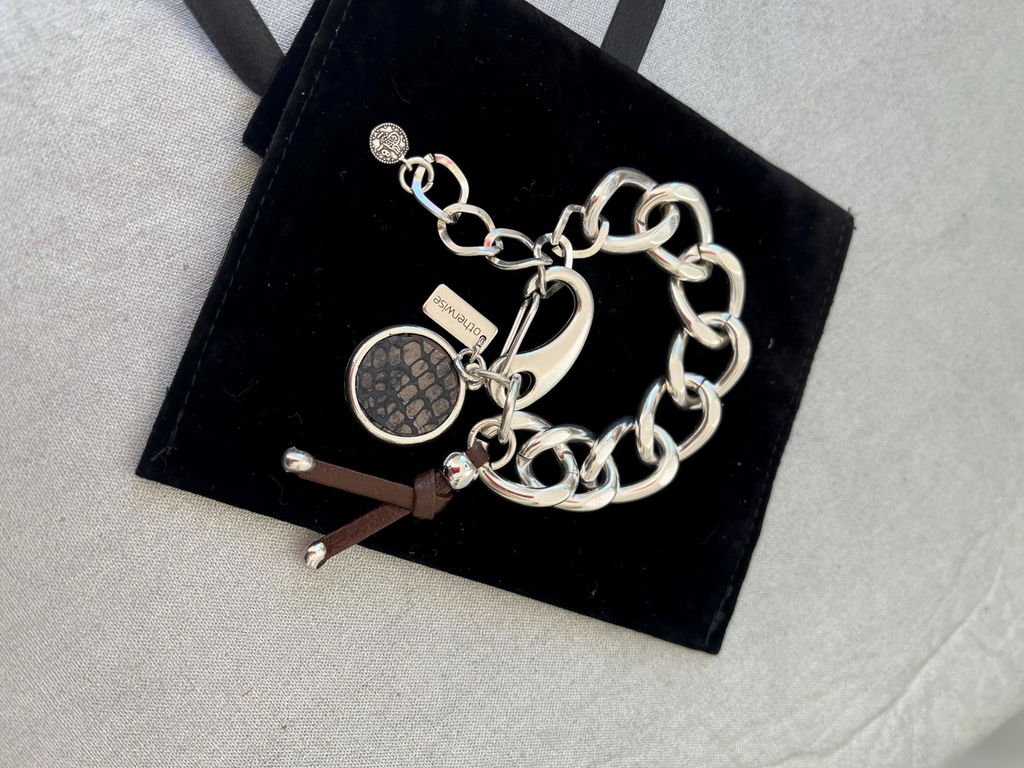
That is why one metal piece and one mixed-material piece often outperform two similar all-metal purchases. For example, a simple metal necklace and a leather-accent bracelet create more contrast across outfits than two near-identical chain styles. If you want to compare finishes and textures, this guide to statement jewelry materials is a useful reference.
Prioritize Versatility Before Trends
Statement jewelry does not need to be neutral, but it should be wearable with more than one outfit. Before buying, ask whether the piece works with at least three looks you already own. If not, it may be better as a later purchase.
Versatile pieces usually have one bold feature rather than several competing ones. A chunky chain, sculptural ring, or open cuff can read clearly without requiring a very specific dress code. This is also why mixed-metal and leather-metal designs can be cost-effective: they bridge casual and dressier outfits more easily than very seasonal styles.
Build in Layers Over Time
You do not need a finished collection immediately. Most strong collections are built in stages, with each purchase filling a gap instead of duplicating what is already there. Once the four core categories are covered, add depth by choosing one area to expand.
For example, you might add a second necklace at a different length, a more architectural ring, or a cuff with a different finish. If layering is part of your style, look at metal necklaces for structured layering options or bangles and cuffs for wrist-focused outfits.
Use Low-Risk Pieces to Test Your Style Direction
If you are not sure what kind of statement jewelry suits you, test one category at a time. Rings and bracelets are often easier starting points because fit is simpler to judge visually and they usually feel less overwhelming than a very large necklace or earring.
A geometric ring, open cuff, or mixed-material bracelet can show you whether you prefer clean lines, heavier shapes, or softer texture contrast. If you want a practical first test, pieces like the Irregular shaped funky ring or the Rose Gold Leather Cuff work because each has a strong point of view without requiring a full coordinated set.
A Simple Buying Order for Any Budget
- Buy one statement piece in the category you wear most often.
- Add a second piece in a different category, not a duplicate.
- Choose a different material or finish for the third piece.
- Add a fourth piece that solves a styling gap, such as formal outfits, casual basics, or layering.
- Pause before buying more and review what you are actually wearing.
This sequence keeps the collection balanced and helps each purchase expand your options. It also reduces the common budget mistake of buying several visually similar items because they feel safe in the moment.
Common Budget Mistakes to Avoid
- Buying only one category, such as earrings, and ending up with limited outfit range.
- Choosing pieces that all have the same scale, finish, or material.
- Buying trend items before securing core pieces.
- Ignoring fit, especially for cuffs, bangles, and chokers.
- Trying to make every piece the loudest item in the collection.
The goal is not maximum size or shine. The goal is a set of pieces that can take turns being the focal point.
FAQ
How many pieces do I need to start a statement jewelry collection?
You can start with 3 to 4 pieces: one necklace, one pair of earrings, one ring, and one bracelet or cuff. That is usually enough to create multiple outfits without unnecessary overlap.
What is the best first statement jewelry piece to buy on a budget?
The best first piece is usually the category you will wear most. For many people, that is a necklace, ring, or cuff because each can change a simple outfit quickly and repeat easily.
Should I buy matching sets or separate pieces?
Separate pieces are often more flexible when you are starting out because they can be mixed across more outfits. Sets can make sense later if they fill a specific styling need.
How do I make a small jewelry collection look more versatile?
Choose different piece types and different materials rather than buying near-duplicates. A mix of necklace, ring, earrings, and cuff in varied finishes gives more outfit combinations than several similar chain pieces.